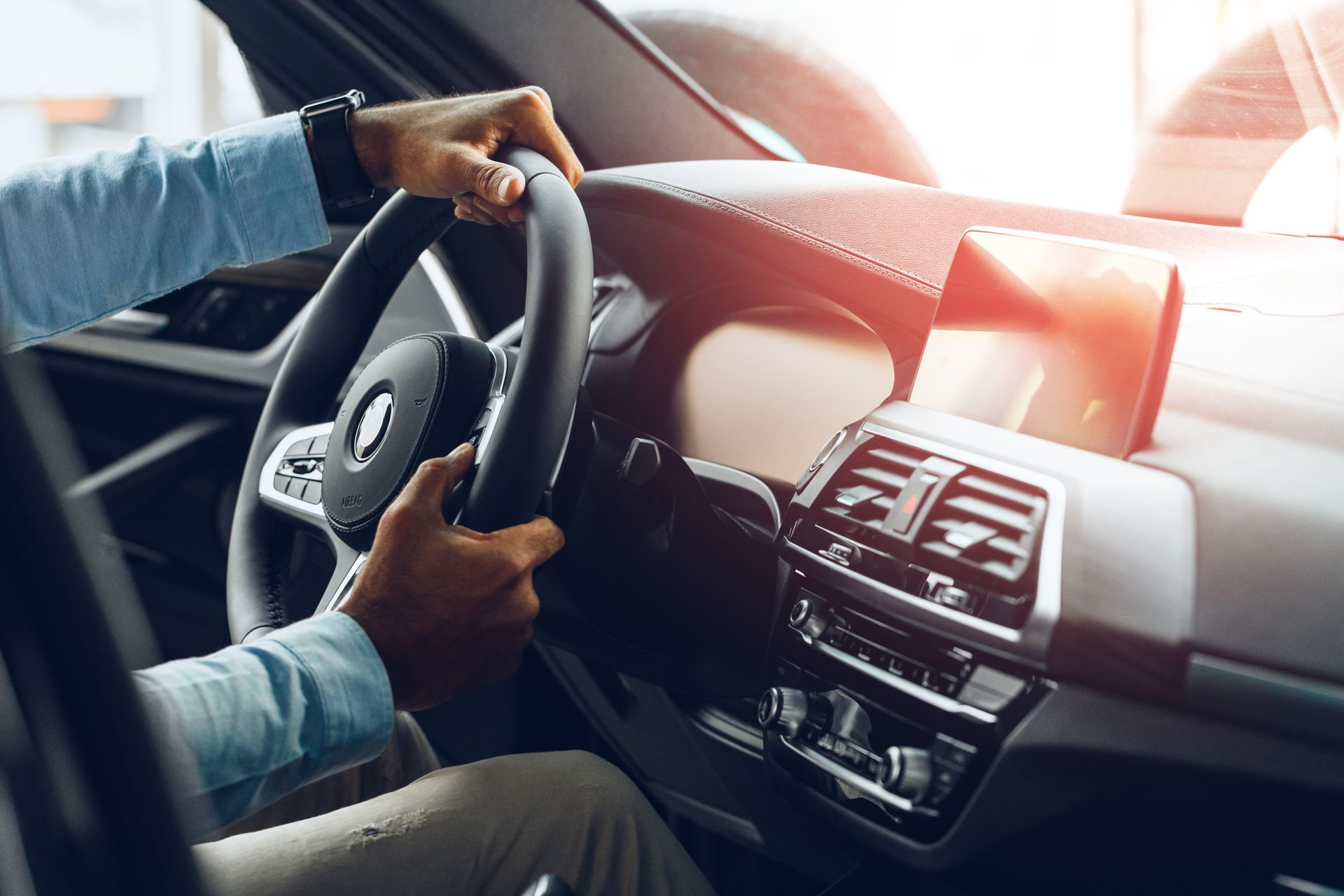
When you drive the same car every day, you become familiar with how the brake pedal normally feels. So when you suddenly hear a click, pop, snap, or light knocking sound every time you press it, the change tends to get your attention quickly.
At our shop, we look at more than the sound itself. We want to know whether it happens while the vehicle is parked or moving, whether the pedal feels different, and whether the noise occurs at the beginning or end of pedal travel. Those details help us narrow down whether the concern is coming from the pedal assembly, brake hardware, booster area, or another part of the system.
The Noise May Be Coming From the Brake Pedal Assembly
The brake pedal moves on a pivot and connects to other components that transfer the force from your foot into the braking system. Bushings, pins, clips, springs, and mounting hardware all have to stay properly positioned as the pedal moves.
If one of those parts becomes worn, dry, loose, or slightly misaligned, you may hear a click or pop when you press or release the pedal. In some cases, we can reproduce the sound while the vehicle is sitting in the shop, which helps us focus on the pedal assembly before moving farther into the brake system.
A Brake Light Switch Can Make a Clicking Sound
Most vehicles have a switch or sensor near the brake pedal that tells the vehicle when the brakes are being applied. It may control the brake lights and provide information to other systems such as cruise control, transmission shift interlock, or electronic brake controls.
Some switches make a light mechanical click during normal operation. If the sound is new, unusually loud, or accompanied by brake lights that stay on or fail to illuminate, we check the switch adjustment, mounting, and electrical operation.
Loose or Worn Pedal Hardware Can Create a Pop
A brake pedal should move in a controlled path without excessive side-to-side movement. When pivot bushings or mounting hardware wear, the pedal can shift slightly before loading against the bracket.
That movement can create a pop you feel through your foot and hear inside the cabin. We pay close attention to any change in pedal position because looseness around the pedal assembly should be corrected rather than treated as a harmless noise.
The Brake Booster Connection Can Be the Source
The brake pedal is connected to the brake booster or brake assist assembly through a pushrod and related hardware. That connection needs to move freely while remaining secure.
Wear at the connection point, loose hardware, or movement in the booster mounting area can sometimes create a clicking or popping noise. If the pedal also feels harder than usual, sits at a different height, or does not return normally after braking, we take those symptoms seriously and inspect the booster area carefully.
ABS Components Can Make Noise During Certain Stops
Not every brake-related click comes from something loose. The Antilock Braking System uses valves and a hydraulic pump to control brake pressure when a wheel is approaching lockup.
During actual ABS operation, you may hear clicking, buzzing, or rapid mechanical sounds and feel pulsation through the brake pedal. That can be normal when braking hard on wet, icy, gravel-covered, or slippery roads.
What we do not expect is repeated ABS-type activity during ordinary stops on dry pavement. If that happens, we may check wheel speed sensor data and related ABS components to determine why the system is activating.
Brake Pads and Caliper Hardware Can Also Click
Sometimes a sound that seems to come from the pedal is actually traveling through the vehicle from the wheels. Brake pads sit inside the caliper bracket and move slightly as braking force changes direction.
If pad hardware is worn, missing, incorrectly installed, or heavily corroded, the pads can shift and produce a click when the brakes are first applied. Caliper slide pins and mounting hardware can cause similar noises if they move excessively.
We often find this type of problem by checking the brakes at each wheel instead of assuming the sound is inside the cabin.
A Clicking Pedal After Brake Work Should Be Checked
If the noise started immediately after brake service, tell us. That timing helps because it may point to recently disturbed hardware or components.
We may inspect caliper brackets, pad clips, pedal connections, brake switches, and other parts related to the work that was performed. A new noise after service doesn't automatically mean something was installed incorrectly, but it gives us a logical place to begin the inspection.
Pay Attention to Changes in Pedal Feel
A click with a normal-feeling pedal is different from a click accompanied by a change in braking performance. If the pedal becomes soft, unusually hard, lower than normal, slow to return, or begins moving sideways, we want to know about it.
Other signs worth mentioning include:
- Brake warning lights
- ABS or traction-control warnings
- Brake lights staying on
- A pedal that sticks
- Vehicle pulling while braking
- Grinding or scraping from a wheel
- A pop that can be felt through the pedal
- Longer stopping distance
The combination of symptoms often tells us more than the noise alone.
How We Check a Clicking or Popping Brake Pedal
At Olive Auto Center, we start by trying to reproduce the sound under the same conditions you experience it. We may operate the pedal with the engine on and off, watch the pedal linkage, inspect the switch and booster connection, and check for looseness around the pedal bracket.
If the sound appears to come from farther down the system, we move to the wheels and inspect the calipers, pads, hardware, and suspension-related components near the brakes. When electronic brake or ABS operation is involved, diagnostic testing can help us see what the control system is doing when the noise occurs.
Brake pedal components do not usually need replacement as part of regular maintenance, so a new sound is worth checking rather than replacing parts based on age alone.
Get Brake Pedal Inspection in Burbank, CA, With Olive Auto Center
If your brake pedal has started clicking, popping, or feeling different when you press it,
Olive Auto Center
in Burbank, CA, can track down the source and determine what needs attention.
We check the pedal assembly, brake hardware, booster connections, ABS system, and related components instead of replacing parts based on the noise alone.
Contact Olive Auto Center to schedule brake service.